It is 2026 and the United States of America is in a bombing campaign against the country
Iran. The President has taken war to social media, threatening to destroy civilian infrastructure in
Iran if they do not comply with demands. Why this aggression against a sovereign country? We
are told we must stop them from developing nuclear weapons. It is a curious situation
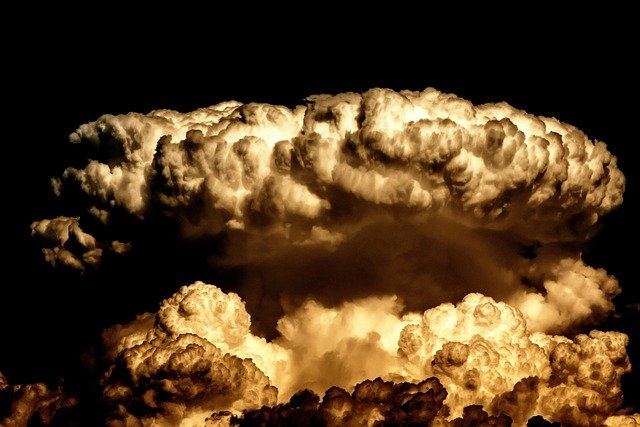
considering the only country to have ever used a nuclear weapon is the United States. Alain
Resnais’ 1959 French film Hiroshima mon amour explores world war II in France and the
aftermath of the United States dropping an Atomic bomb on the Japanese city of Hiroshima in
1945, to force Japanese surrender and end world war II. Hiroshima mon amour was Resnais’ first
feature film, and it was an international sensation (Sartin). Why did the world love this film?
Empathy.
This French New Wave film follows a brief love affair between a (married) French
actress and a (married) Japanese man in post nuclear Hiroshima. It is not linear. The film
depends on memory flashbacks. The couple are bonded by their traumatic memories of wartime.
“YOU SAW NOTHING” is repeated after each recollection. It is an evident battle between
memory, reality, and propaganda. In the first scene, their bodies are intertwined and the camera is
as close up as it can be to the characters’ reality, as glitter ash falls upon their naked bodies.
“YOU SAW NOTHING IN HIROSHIMA” speaks to everything known about being told not to
believe your own eyes. Viewers know the ash was real in Hiroshima. Resnais wanted the viewers
to feel that slap in the face of not following the proper narrative, when recalling wartime
memories.
Sarah French explains in her analysis “From History to Memory: Alain Resnais’ and
Marguerite Duras’ Hiroshima mon amour” that Resnais began the Hiroshima project as a
documentary and used documentary footage in the fictional film written by Marguerite Duras.
French further explains, writer and director felt much of Hiroshima was unrepresentable. The
first sequence is sixteen minutes of flash backs. Viewers turn their heads to the melting skin, the
destroyed city, the children. Resnais demands empathy of his viewers through real images and
history.
Hiroshima mon amour has great depth in story. The plot does not stay in Hiroshima. In
fact, the plot can be thought of as wartime trauma, with many stories supporting that trauma.
Resnais takes viewers to the hometown of the leading lady, Nevers, France. She details her
fourteen-year trauma caused by falling in love and having an affair with a German soldier.
France and Germany were bitter enemies in world war II. She is deeply shamed by everyone and
forced to live in a cellar because of her affair. The cellar and the pain can be felt through the dark
close ups. Images of her sucking her own blood trigger deep sadness in viewers, even anger. She
watches them murder her lover for the simple fact he is German and loves a French woman.
Sarah French argues about the accuracy of memory versus history. She has valid
arguments. Throughout time the world’s ability to document history in real time has improved
because of technology. Does that mean that memory is not a valid medium for relaying historic
events? Hiroshima mon amour argues for memory but admits reality when the leading lady
states, “the only memory I have left is your name”. This is a sudden shift. The whole process was
about memory and suddenly there is only one memory remaining.
A review of Hiroshima mon amour cannot end without addressing one of the most
profound lines or moments in the film “The whole world rejoiced”. The whole world rejoiced an
entire city being destroyed in seconds because it ended the war. Is society that flawed? It would
seem so. It has been eighty years since the end of world war II and the world is on the brink of
world war III. Media is being denied access to much of the current war. “YOU SAW
NOTHING” and you will accept it is profoundly applicable still today.
Works Cited
French, Sarah. “From history to memory: Alain Resnais’ and Marguerite Duras’ Hiroshima Mon
Amour.” Emaj–Electronic Melbourne Art Journal 3 (2008).
cultureinjection.wordpress.com/wp-content/uploads/2020/06/sarah-french-from-historyto-
memory-alain-resnais-and-marguerite-duras-hiroshima-mon-amour-emaj-issue-3-
2008.pdf. Accessed 22 March 2026.
Sartin, Hank. “Alain Resnais, 1922–2014”. Ebert Digital LLC 2014.
rogerebert.com/features/alain-resnais-19222014. Accessed 23 March 2026.