Traveling the backroads of America, one is sure to come upon an abandoned small town. Most towns and buildings aren’t even a thought for busy travelers, but those streets, those buildings, were once bustling with life, with love, with the human experience. Peter Bogdanovich’s The Last Picture Show (1971) tells the story of one of those deserted American towns. Bogdanovich successfully mingles the coming-of-age story of his high school characters, Sonny (Timothy Bottoms), Duane (Jeff Bridges) and Jacy (Cybill Shepherd), with the ending of an era for the streets and buildings of 1951 Anarene, Texas.
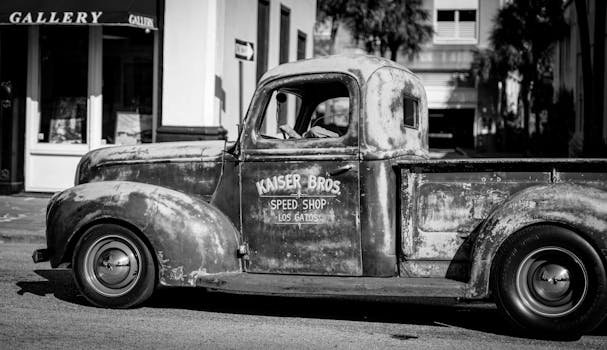
The Last Picture Show is shot in 1971, a time with color in film, but Bogdanovich used black and white film to “facilitate deep focus shots and evoke nostalgia” (Fuller) for 1951 America, a decision said to be influenced by Orson Welles (Fuller). The cinematography is reminiscent of Welles’ Citizen Kane, thirty years prior. The film begins with a wide long shot of the empty desert. It’s impossible for viewers to ignore the wind. From the blowing open of the pool hall door, to the characters pulling up their collars and coats throughout the film, Bogdanovich wants the desolate Texas desert wind to be felt by all.
Welcome to Anarene, Texas, where the wind and the sexual tension is plentiful and the football team is never satisfactory to the old folks. The town has a pool hall (where girls aren’t allowed), a diner, and a picture show all owned by Sam The Lion (Ben Johnson). It is Sam’s untimely death while the boys are off playing in Mexico that marks the beginning of the end for Anarene. In his will, Sam leaves his businesses to the various townspeople, including leaving the pool hall to young Sonny. But, like most 1950’s small towns, and most first loves, nostalgia is more satisfying than reality. Everyone grows up and away.
The Last Picture Show is filled with sexual firsts but also with sexual blossoming, whether that be Jacy stripping in front of a group of rich teens, or pretending she and Duane had sex in the hotel, sex is front and center for the emerging adults in this film. Bogdanovich did not stop with the teens. Sonny has a hot affair with a forty-year-old woman, his coach’s wife. Jacy’s mother has her way with one of the roughnecks who works with her husband and later, Jacy is with the same man. Everyone in the town is discovering something about themselves and about life through sexual exploration.
Possibly one of the most heartwarming and heart wrenching stories in The Last Picture Show is the story of Billy (Sam Bottoms). Billy is an autistic boy at a time when autism was not understood. In fact, Roger Ebert wrote a review in 2004 referring to Billy as a retarded boy (Ebert). Billy is watched over by Sam The Lion. Their relationship is unknown. Billy hangs out with the other boys and Sonny tends to keep an eye on him. Even Billy is brought into the town’s sexual tension when several of the town’s boys pay to have him lose his virginity with a prostitute. It does not go well and Sam The Lion comes down hard on the boys. He eventually forgives Sonny. Sadly, Billy is hit by a truck and killed in the street at the end of the film.
The Last Picture Show explores adolescence, life and loss. It is a film that speaks to audiences from varying perspectives, but in the end it is about the end of Anarene, Texas and the beginning of everything else.
Works Cited
Ebert, Roger. “Deep in the heart of Texas.” Ebert Digital LLC. 4 July 2004.
rogerebert.com/reviews/great-movie-the-last-picture-show-1971. Accessed 13 Apr 2026.
Fuller, Graham. “The Last Picture Show: In With the Old.” The Criterion Collection. 26 Nov
2010. criterion.com/current/posts/1669-the-last-picture-show-in-with-the-old. Accessed 13 Apr 2026.